
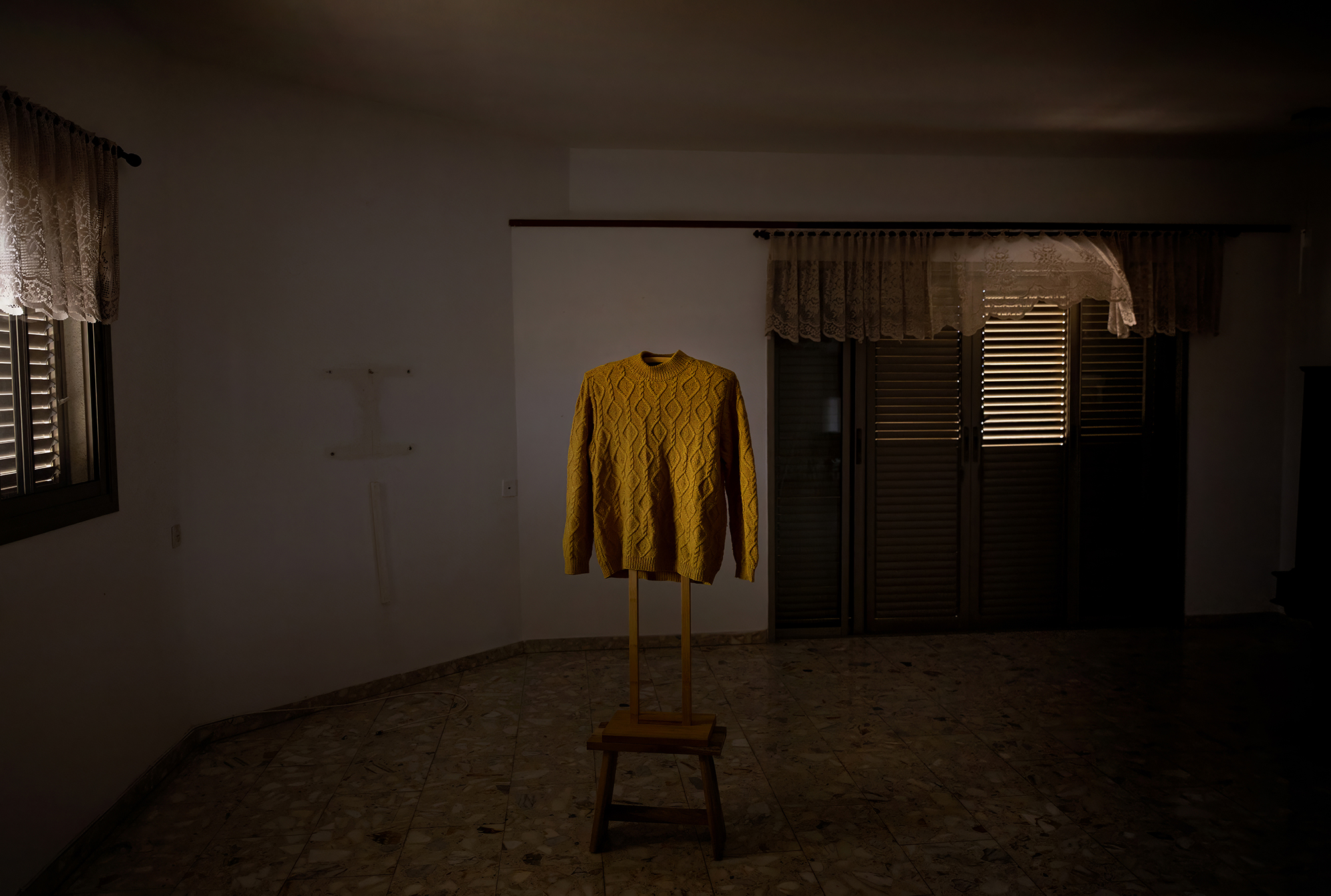

Shmuel Hazon’s sweater rests on a rack in the center of his empty apartment.
Petah Tikva, Israel.
After losing his son, Shmuel found purpose in volunteering. However, COVID-19 isolation eroded his sense of purpose. Struggling with grief, he ended his life by jumping to his death from the seventh floor at the age of 87.
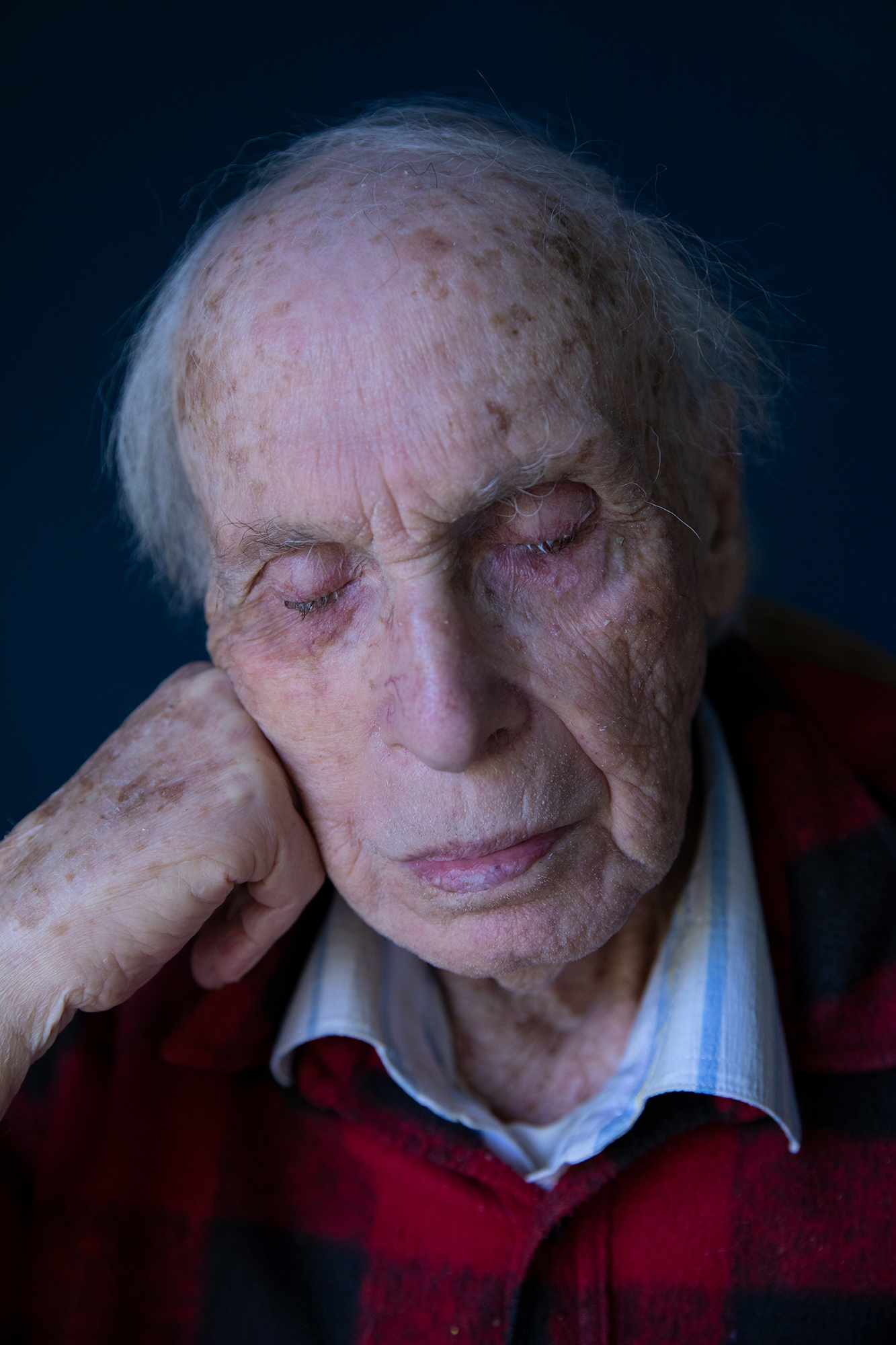
Mordechai Zilberman, wearing the jacket of his late partner Aryeh, sits for a portrait.
Jerusalem, Israel.
The couple were together for sixty years, navigating Aryeh’s dementia and lingering trauma from the Holocaust. On Aryeh’s eighty-eighth birthday, his condition worsened at home. Mordechai chose not to seek help, telling him he could “rest.” That night, Aryeh passed away. Mordechai often wears Aryeh’s clothes to feel close to him.
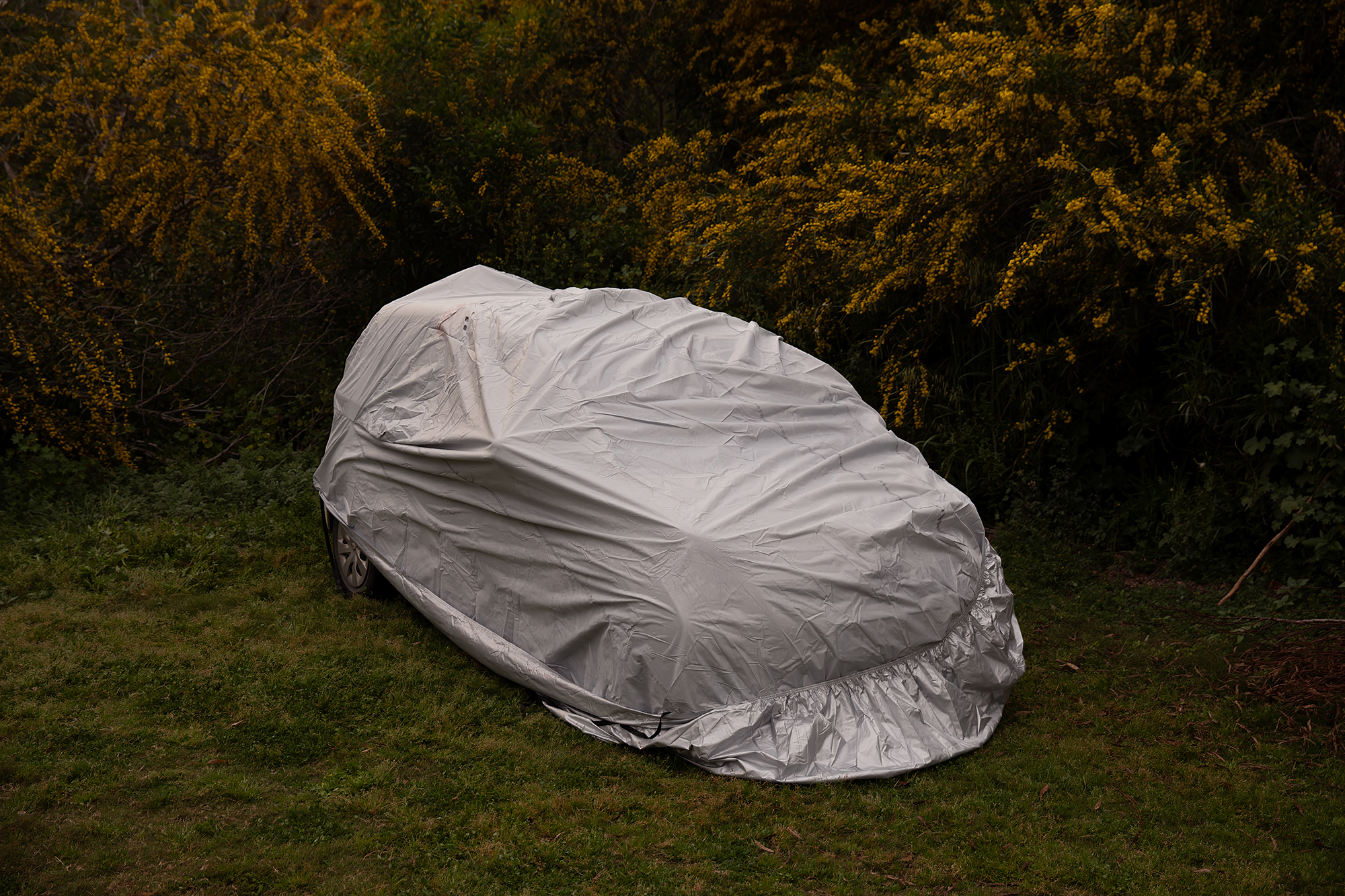
An organized setting of the covered car of Moshe Etzion, who took his own life at the age of 88.
Kfar Monash, Israel.
Moshe deeply valued his independence, particularly his love for driving. After surgery, doctors advised him to stop driving, which he found difficult to bear. In his suicide letter, Moshe expressed his fear of becoming a “burden” to his family. He ended his life at his son’s grave, using a gun that had once belonged to his son.
The photographer covered the car to symbolize Jewish shrouds, the traditional burial cloth in which a body is wrapped before burial.
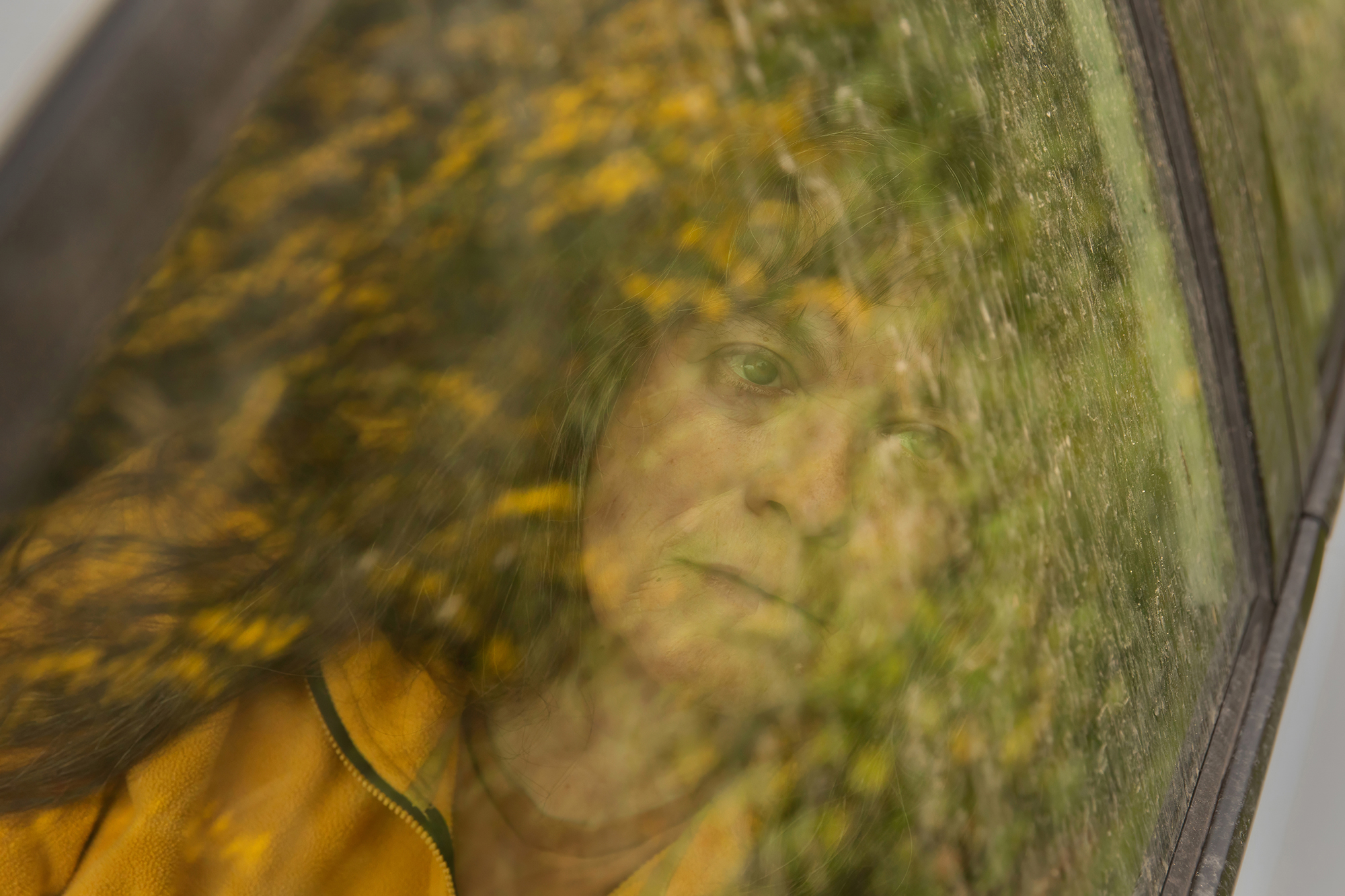
Smadar Halperin sits in the beloved car of her father, Moshe Etzion, who took his own life at the age of 88.
Kfar Monash, Israel.

Three sisters, Almog, Sapir, and Inbar Paz, float in the waters of their childhood beach.
Caesarea, Israel.
A day after visiting this beach, their mother, Sara Paz, took her own life at the age of 59. Despite the support of her daughters, she ended her life. The stigma surrounding suicide often forces families to hide their stories, intensifying their isolation and grief.
A daughter of Holocaust survivors, Sara endured a difficult upbringing and long
struggled with depression. Despite her daughters’ support, she chose to end her life.
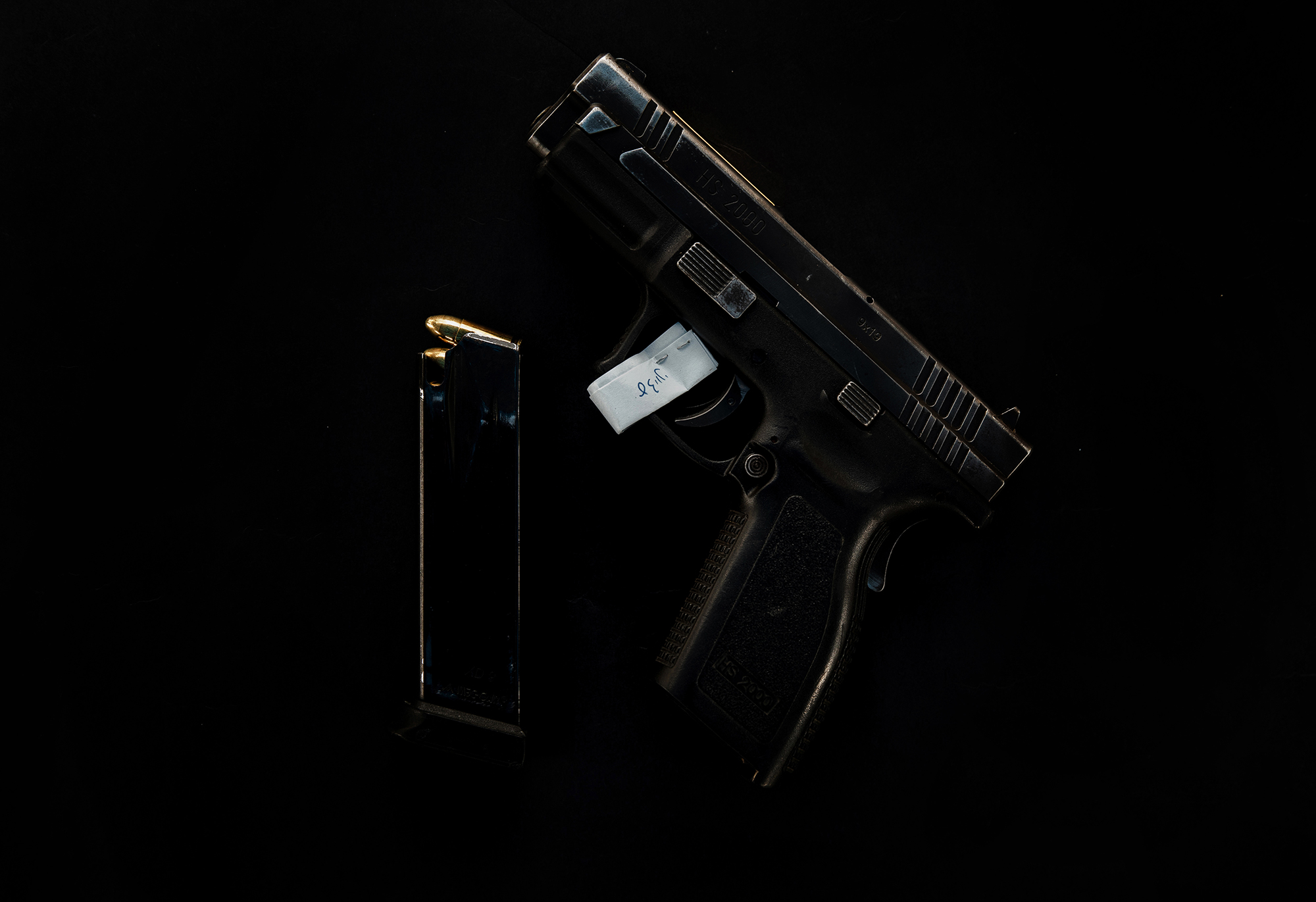
The gun of Moshe Etzion.
Ofakim, Israel.
Moshe took his own life at the age of 88 using this gun. It was owned by his son, who was killed in 2014.
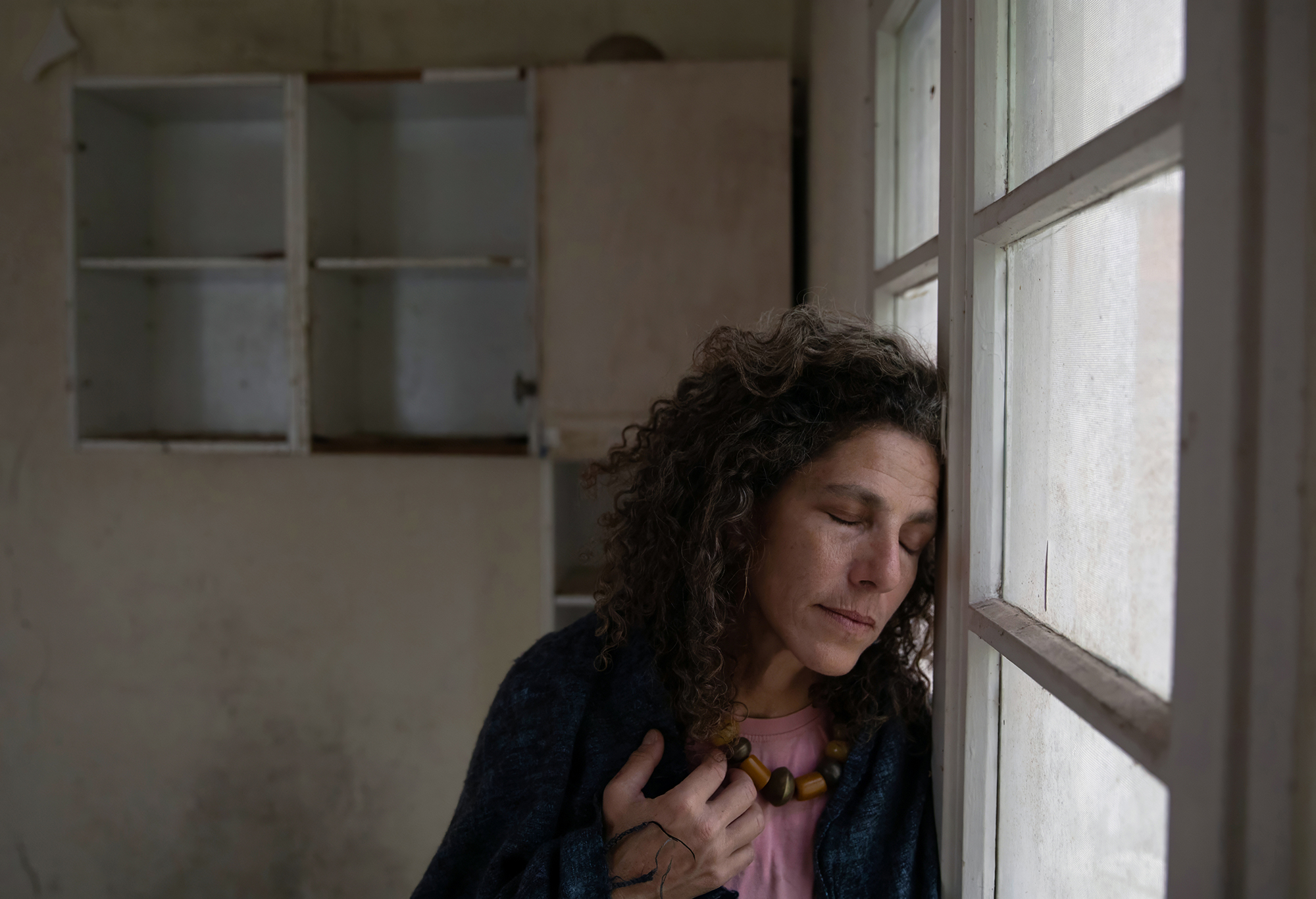
Yael Ben Ari stands in her family’s abandoned estate, wearing her mother’s scarf and necklace.
Kfar Neter, Israel.
It was here that her mother, Zipora, took her own life at the age of 63.
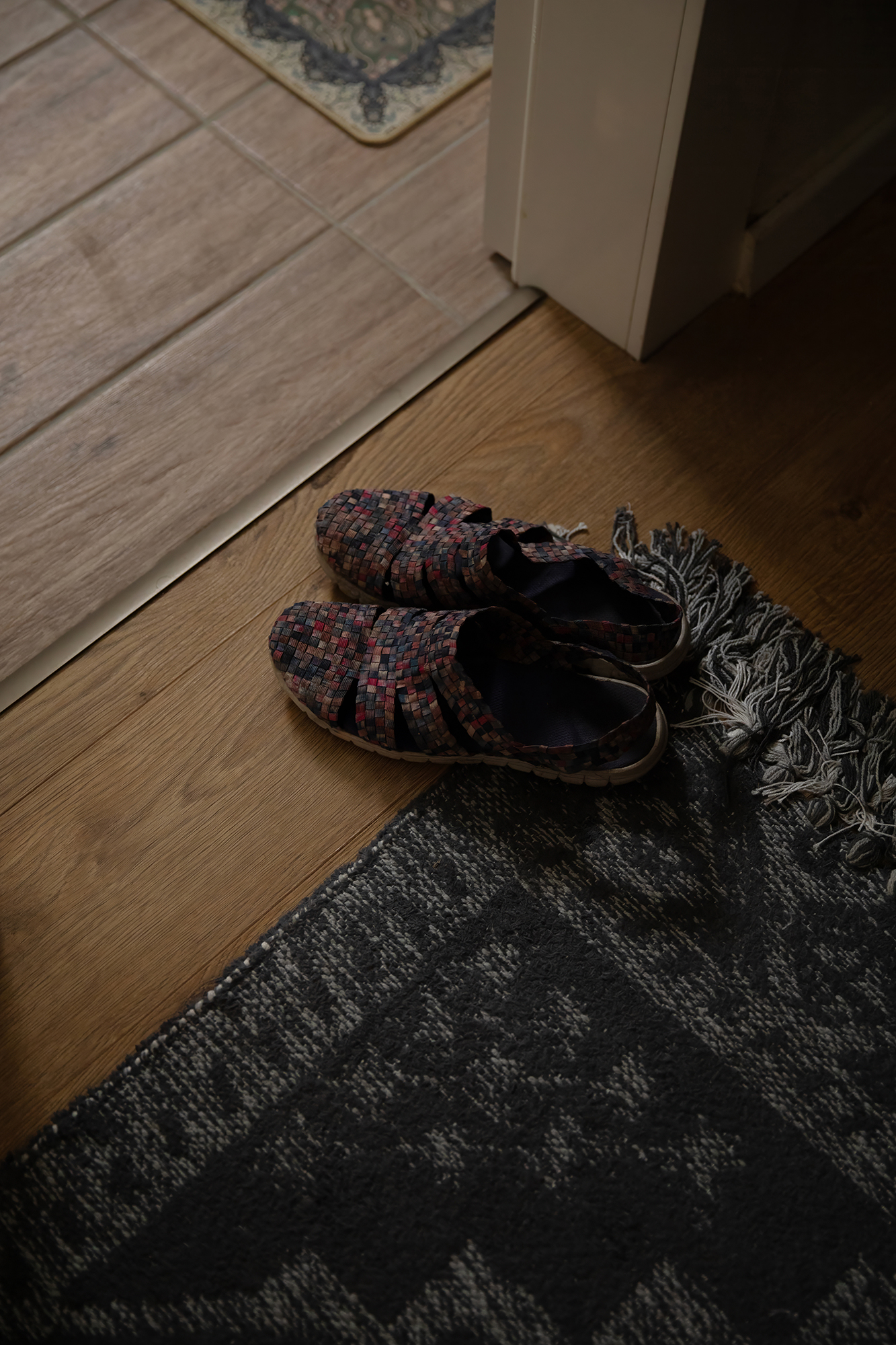
Sara (Sari) Paz’s shoes placed in her home.
Pardes Hanna, Israel.
Sara took her own life in the bathtub at the age of 59.
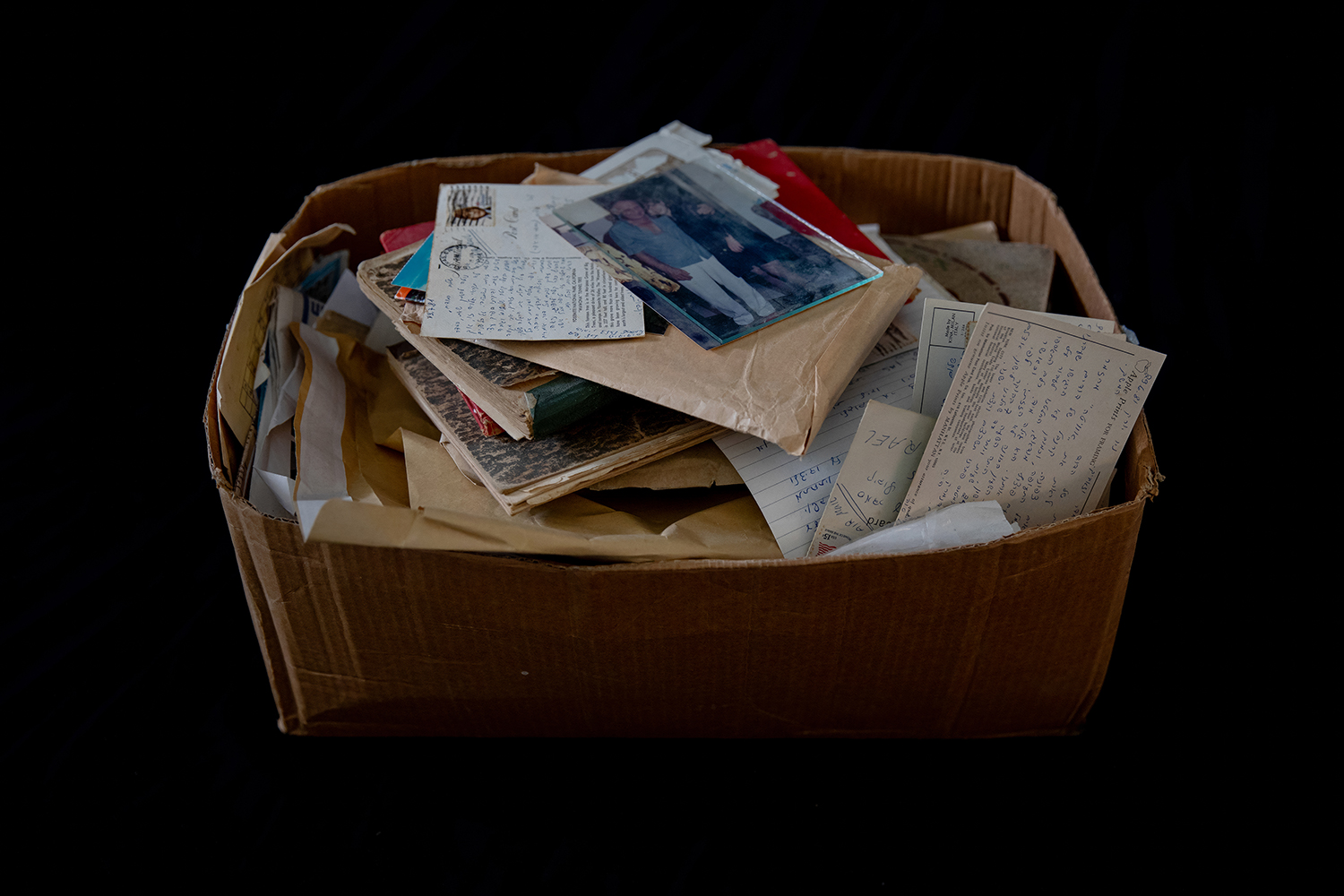
A cardboard box containing the personal belongings of Moshe Etzion, who took his own life at the age of 88.
Nirim, Israel.
Inside are letters, postcards from distant trips, and photographs—a lifelong collection of memories.
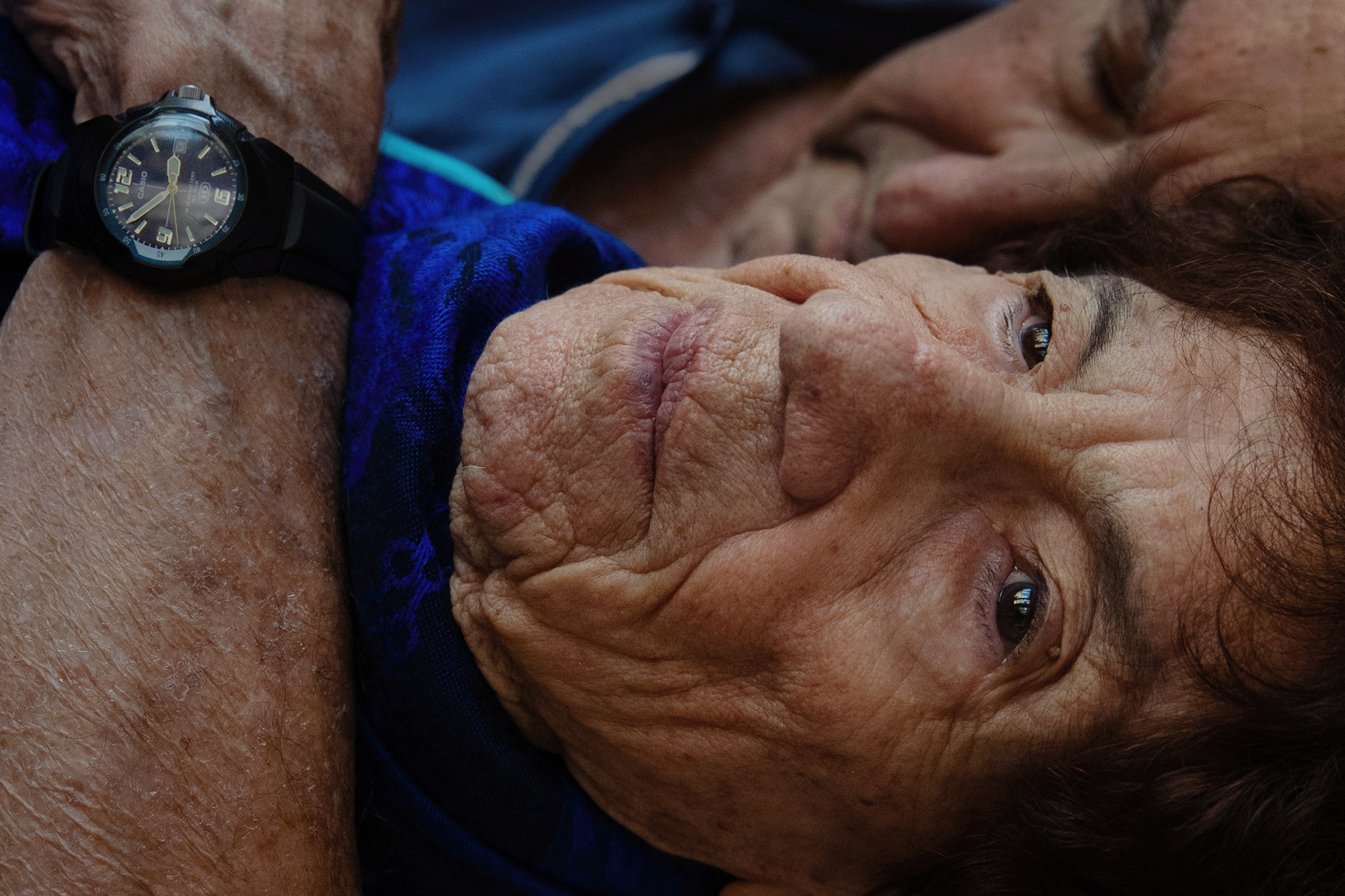
Michal and Yosef Shatsky, both aged 88, pose in their home.
Kibbutz Magen, Israel.
Inspired by her parents, who ended their lives together in old age out of fear of age-related decline, Michal wishes to do the same in Switzerland. Her husband, Yosef, supports her decision, though he fears the pain of being left alone.
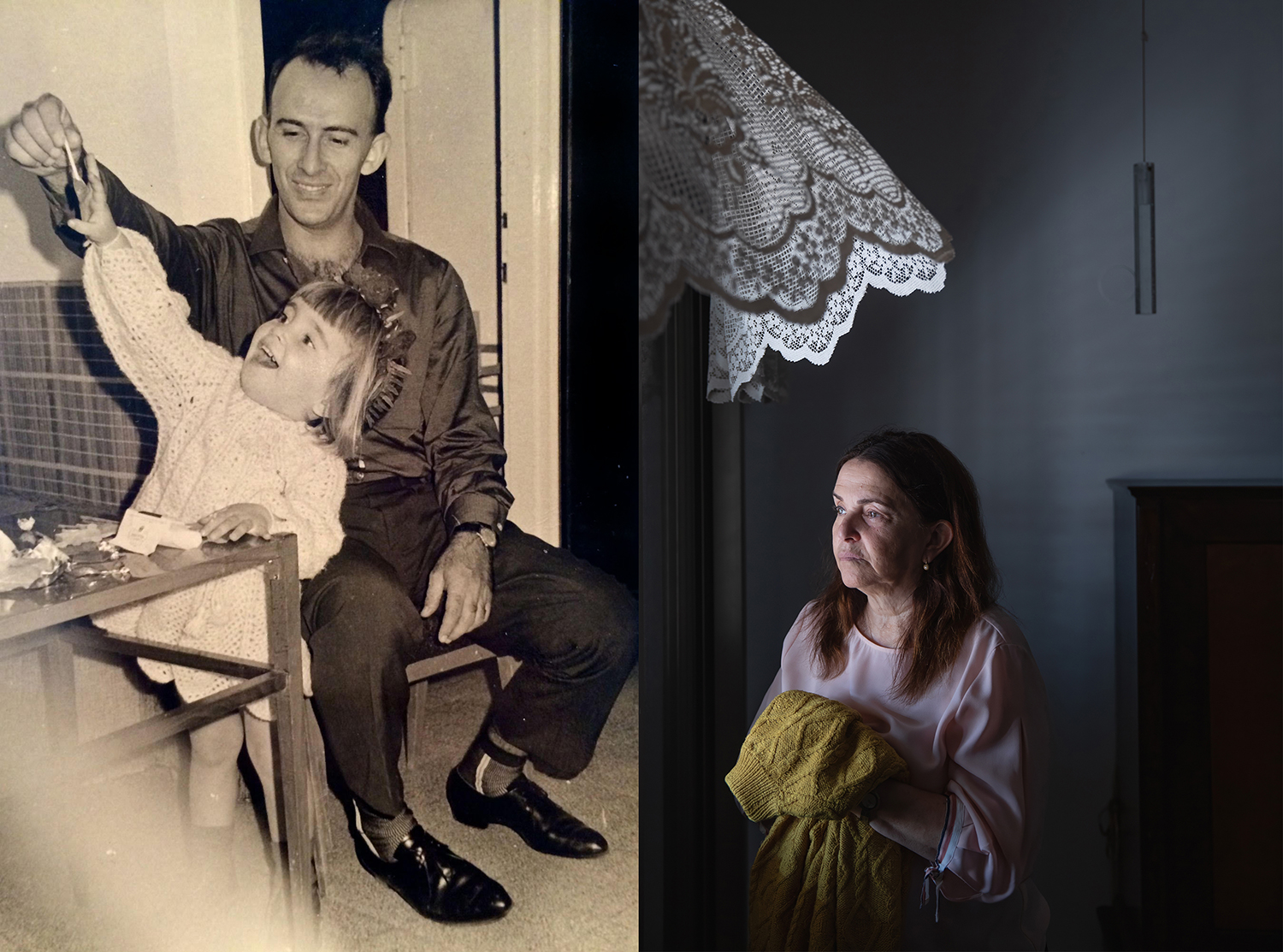
Left: Shmuel Hazon with his daughter Michal. Photograph by an unknown photographer.
Right: Michal Shmueli Hazon, holding her father’s sweater, stands by the window from which he jumped to his death at the age of 87.
Petah Tikva, Israel.
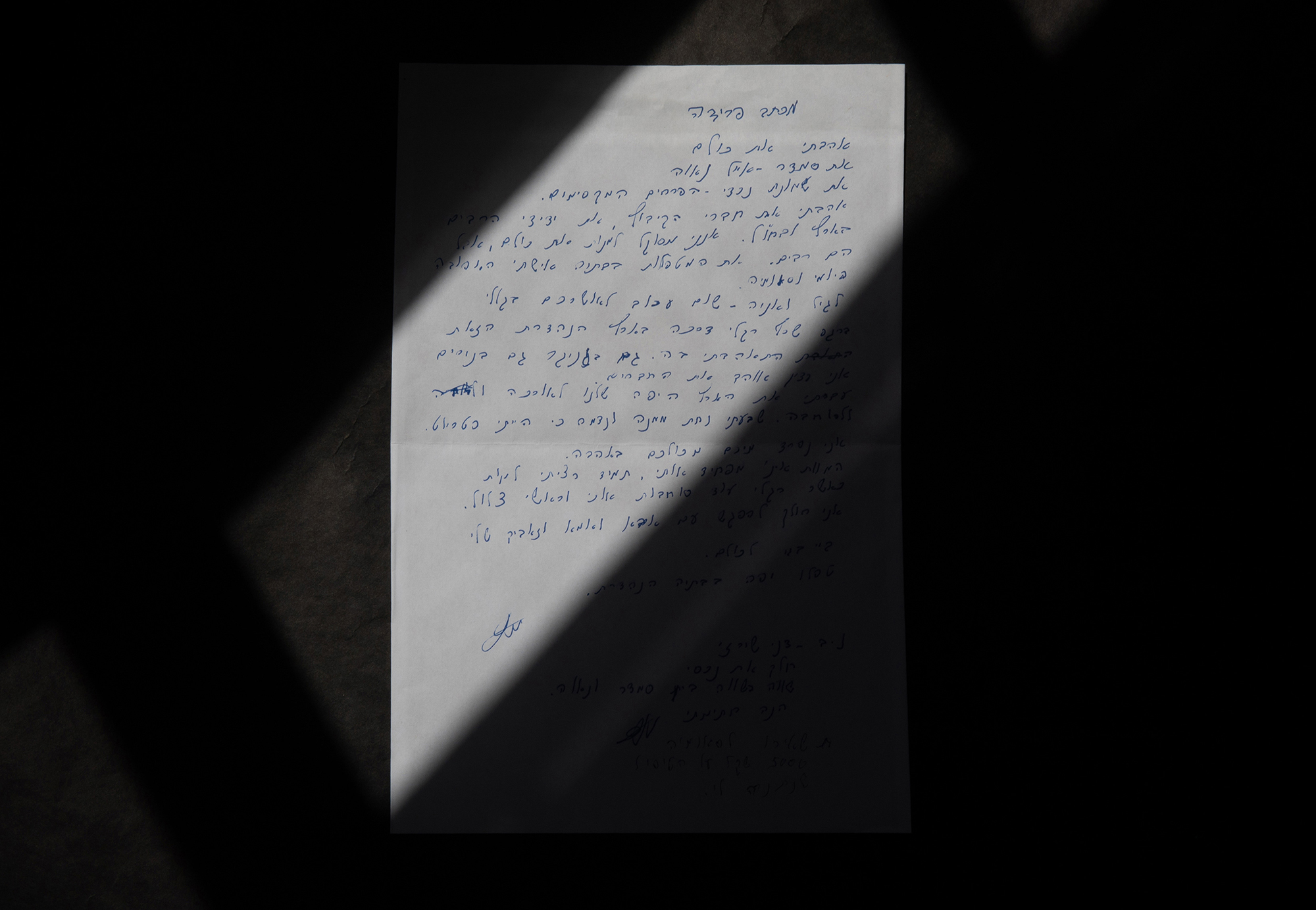
Moshe Etzion’s suicide note.
Nirim, Israel.
The note was found by his family inside an atlas. In his final message, he wrote:
“…I say goodbye to all of you with love.
Death does not scare me.
I always wanted to die when my legs still carried me,
and my head was clear.”
He took his own life at the age of 88.
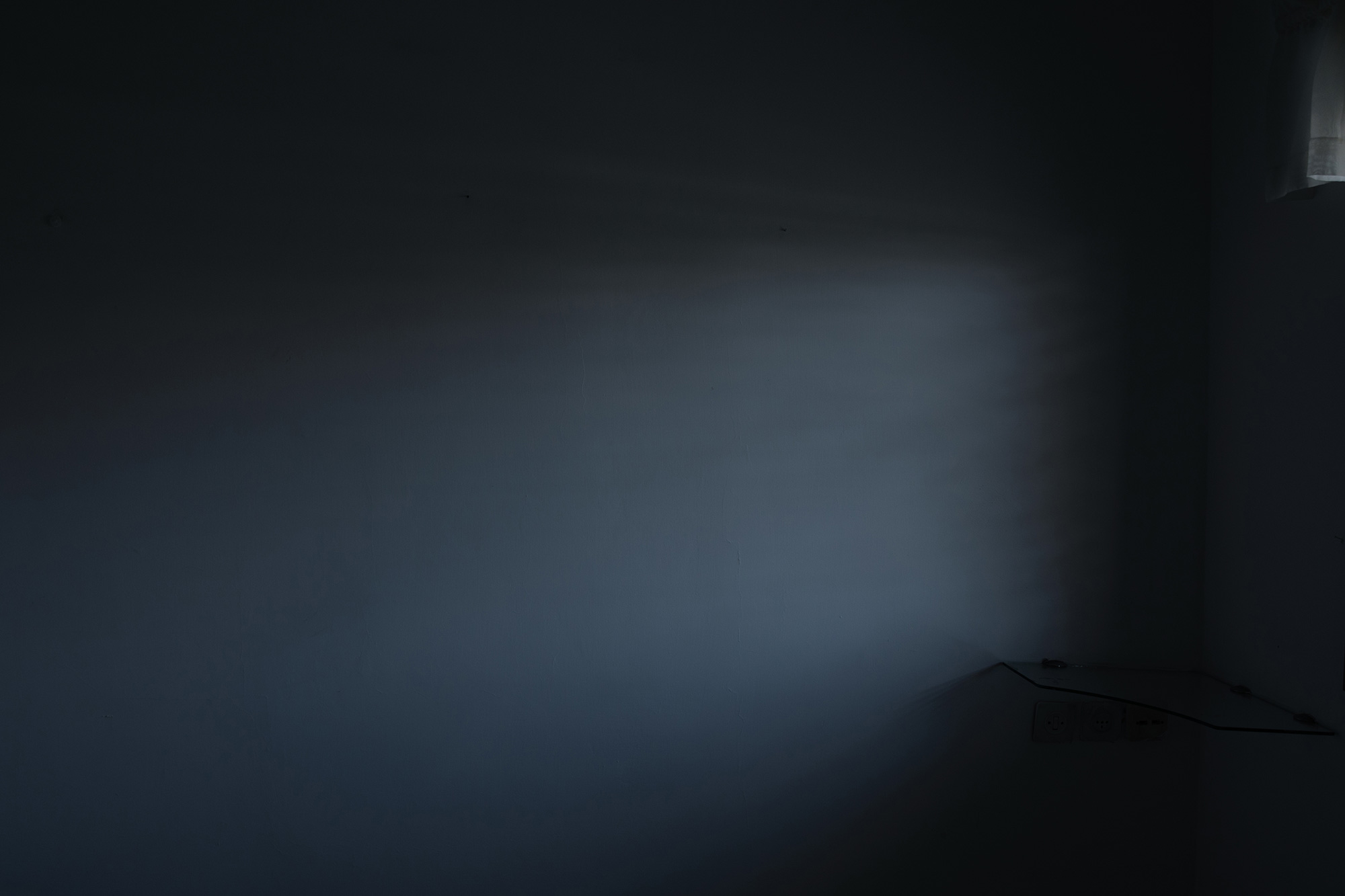
Shemuel and Rina Hazon’s empty bedroom.
Petah Tikva, Israel.
New tenants will soon fill the space and begin their own story.